Wrist & Hand
Instability
Evidence: confirmed
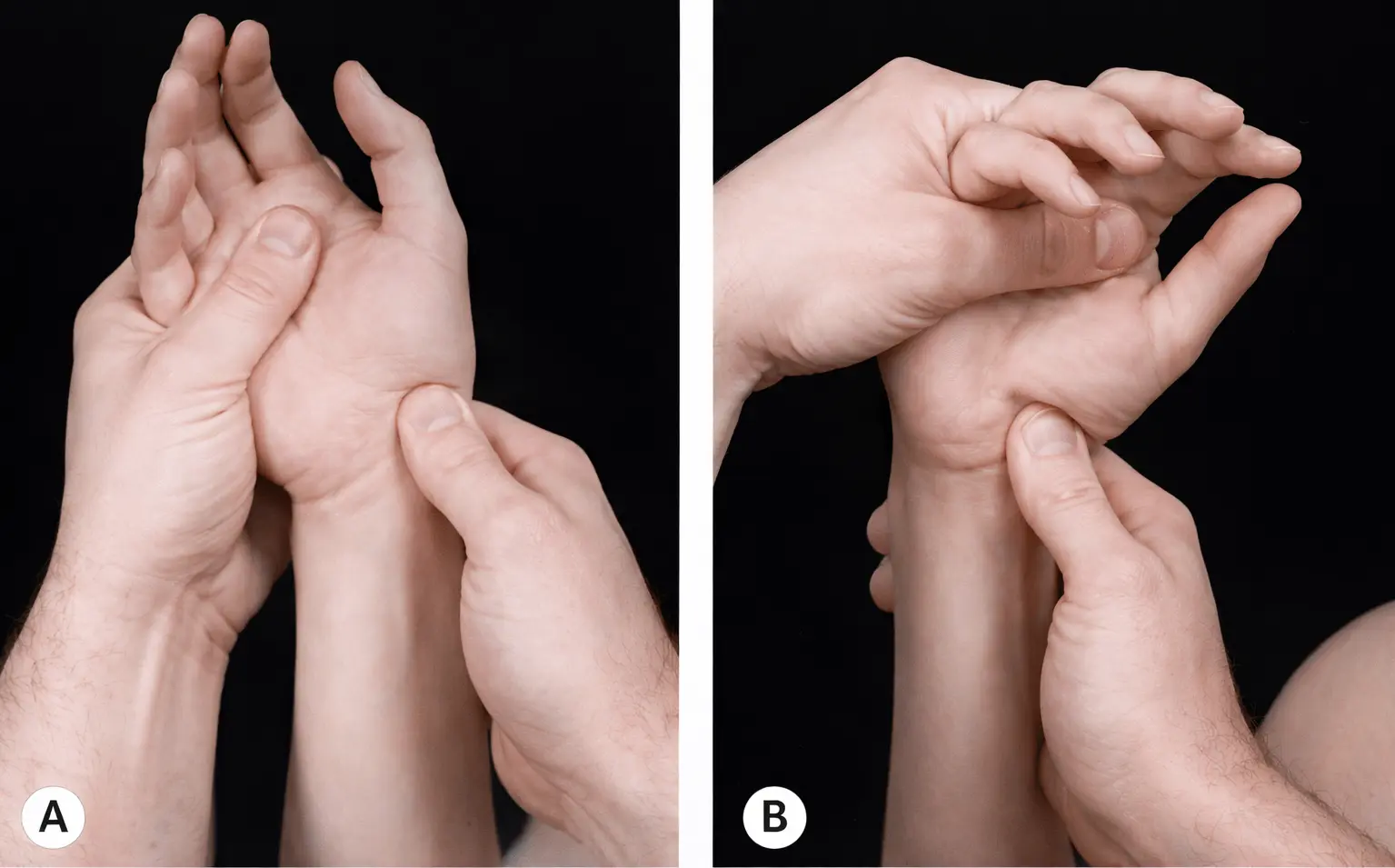
Watson Test (Scaphoid Shift) Special Test
Orthopedic Physical Examination & Clinical Assessment Guide
What is it used for?
- Diagnosing Scapholunate Ligament Instability.
How to Perform
- Position: Examiner places a thumb on the scaphoid tubercle (palmar side) and moves the patient's wrist from Ulnar Deviation into Radial Deviation.
- Action: Apply constant dorsal pressure on the scaphoid to prevent it from flexing.
Interpretation of Results
- Positive Test: A palpable "clunk" or shift as the scaphoid subluxes over the dorsal rim of the radius, often with dorsal pain.
Diagnostic Accuracy
- Sensitivity: 69%
- Specificity: 66%