Wrist & Hand
Tendon Injury
Evidence: uncertain
Linburg-Comstock Anomaly Test Special Test
Orthopedic Physical Examination & Clinical Assessment Guide
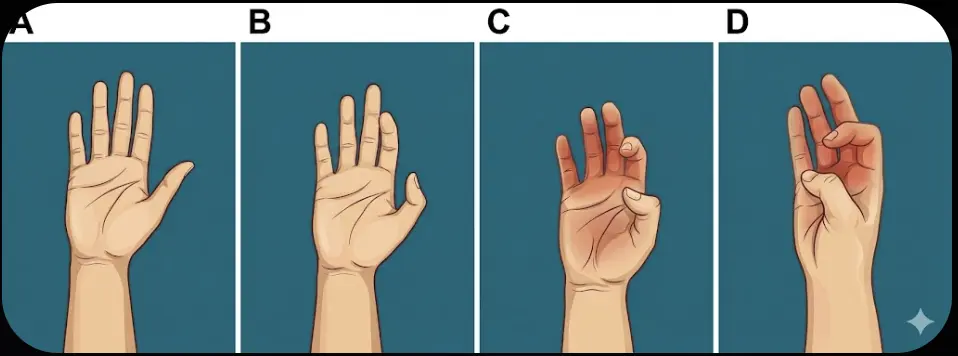
What is it used for?
- Detecting an anatomical connection between the FPL (Thumb) and FDP (Index) tendons.
How to Perform
- Position: Examiner restricts the index finger in extension.
- Action: Patient attempts to flex the thumb IP joint.
Interpretation of Results
- Positive Test: Pain in the forearm or inability to flex the thumb.
- Meaning: The tendons are adhered/connected, causing tenosynovitis symptoms.
References
- Magee, D. J. (2021). Orthopedic Physical Assessment.